Asphalt Plant Bucket Elevator: Function and Components | Pars Badie
What Is an Asphalt Plant Bucket Elevator? Function and Main Components
Introduction
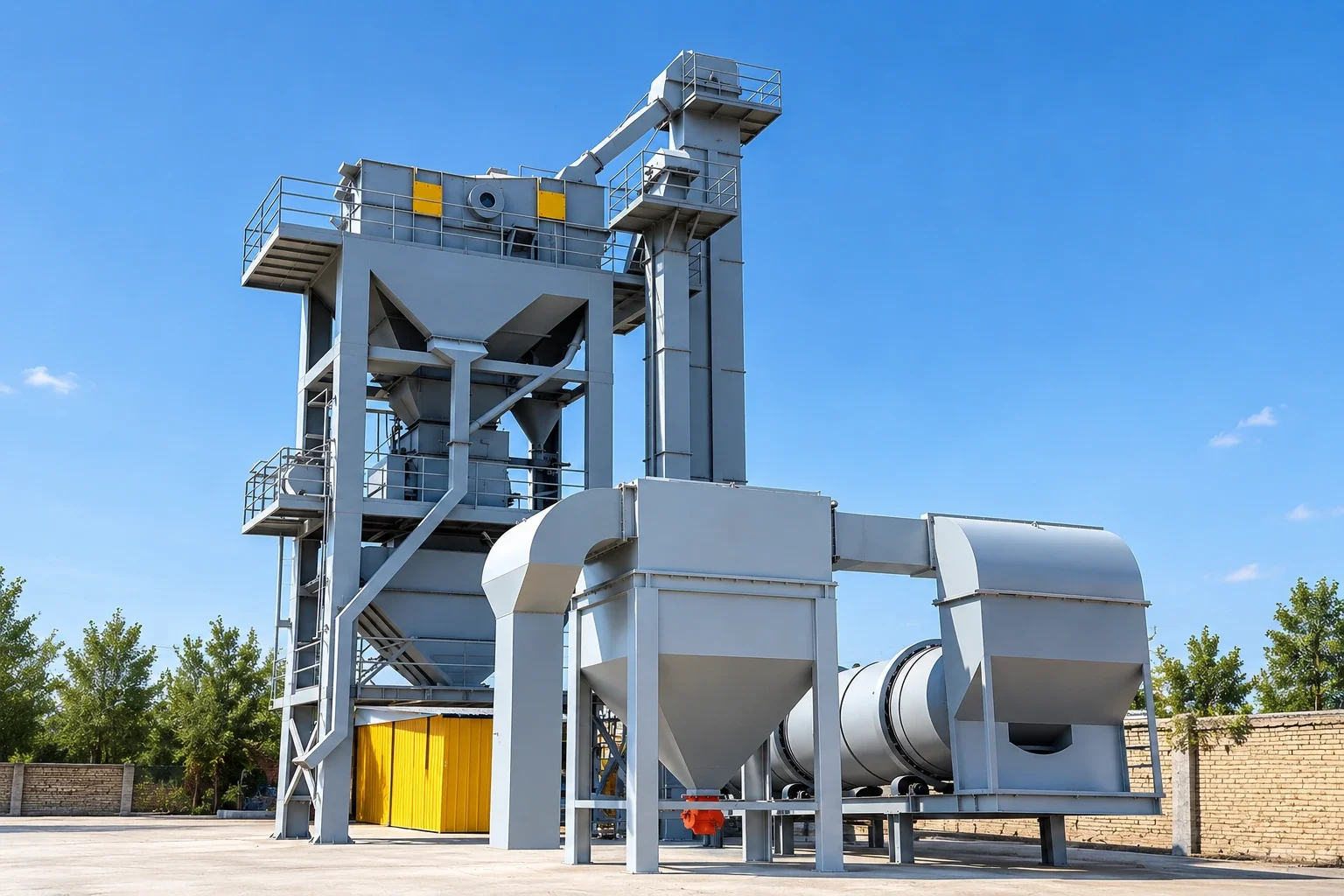
A bucket elevator is an important part of the material handling system in an asphalt plant. It is used to transport aggregates or filler vertically between different sections of the production line. Reliable material transfer helps maintain production flow, coordinate equipment operation, and support the required plant capacity.
In asphalt batch plants, elevators are selected and designed according to their installation location, the type of material being handled, and the operating conditions. Depending on the plant configuration, they may deliver materials to screens, hot bins, storage equipment, or other processing units.
How Does an Asphalt Plant Bucket Elevator Work?
A bucket elevator is designed to receive material at a lower point and lift it to a higher discharge point. In many common designs, a series of buckets is attached to a moving belt or chain.
The buckets collect material at the loading section and carry it upward as the belt or chain moves through the elevator casing. At the discharge section, the material leaves the buckets and enters the next part of the handling system.
The elevator’s performance depends on several factors, including the conveying mechanism, operating speed, bucket capacity, and lifting height. Selecting and adjusting these parameters appropriately helps provide reliable material transfer and reduce interruptions in the production process.
Main Components of a Bucket Elevator
An asphalt plant bucket elevator consists of several key components. Their design, manufacturing quality, and installation directly affect the equipment’s performance.
1. Elevator Casing and Supporting Structure
The casing and supporting structure guide the conveying assembly along its vertical path and protect the internal components. Structural strength and accurate installation are important for reliable operation.
2. Material Handling Buckets
Buckets collect, carry, and discharge the material. Their capacity, shape, spacing, and arrangement should be selected according to the material characteristics and required conveying capacity.
3. Conveyor Belt or Chain
The belt or chain moves the buckets through the elevator. The appropriate conveying system depends on the required capacity, material properties, operating conditions, and equipment design.
4. Drive System
The drive system generally includes an electric motor, gearbox, and associated power transmission components. It supplies the motion required to transport material through the elevator.
5. Pulleys, Sprockets, and Guiding Components
Depending on the design, pulleys or sprockets guide the belt or chain through the elevator. Correct alignment and adjustment help maintain stable movement and reduce unnecessary wear.
6. Loading and Discharge Sections
The loading section receives material, while the discharge section directs it toward the next piece of equipment. Proper design of these areas helps reduce material spillage and maintain a consistent flow.
Types of Elevators Used in Asphalt Plants
Elevators can be classified according to the materials they handle, their conveying mechanism, and their operating conditions. Bucket elevators are widely used for vertical material transportation in industrial applications.
In an asphalt plant, the elevator should be selected according to its installation location, required capacity, material temperature, and aggregate or powder characteristics. For example, hot aggregate handling may require components suitable for elevated temperatures and abrasive materials. Filler elevators, on the other hand, must be designed for fine particles and the requirements of powder handling.
For this reason, one elevator design is not necessarily suitable for every application. The equipment should be selected according to the plant’s actual operating requirements.
Aggregate Elevators vs. Filler Elevators
Asphalt plants may use elevators to transport either aggregates or filler. The main differences relate to the properties of the materials and the conditions under which they are handled.
Aggregate elevators are designed to transport stone materials and must be suitable for the required load, abrasion, and operating temperature.
Filler elevators handle fine powder. Their design should consider factors such as powder leakage, dust control, and compatibility with the connected feeding and discharge equipment.
Selecting the appropriate elevator type helps improve material handling and coordination between plant components.
Factors Affecting Elevator Performance
The performance of an asphalt plant elevator depends on its design, material characteristics, and operating conditions. Important factors include:
Required conveying capacity
Lifting height
Material type, size, and weight
Material temperature at the transfer point
Operating speed
Bucket design and capacity
Manufacturing and installation quality
Coordination with upstream and downstream equipment
Selecting an elevator that matches the plant’s production requirements and actual operating conditions helps avoid unnecessary equipment stress and supports reliable performance.
Maintenance of an Asphalt Plant Elevator
Regular inspection and maintenance are essential for reliable elevator operation. Maintenance procedures should include checking the belt or chain, buckets, motor, gearbox, bearings, and guiding components.
Inspecting connections, monitoring unusual noise or vibration, ensuring appropriate lubrication, and checking for excessive wear can help identify potential problems at an early stage.
The maintenance schedule should follow the manufacturer’s recommendations and reflect the actual operating conditions. Before maintenance or repair work, the equipment must be safely isolated and hazardous energy sources controlled in accordance with applicable safety procedures.
Choosing the Right Elevator for an Asphalt Plant
Selecting an elevator involves more than determining its conveying capacity. Lifting height, material type, operating temperature, available installation space, and compatibility with other plant equipment should also be considered.
A properly designed material handling system helps maintain a consistent flow of aggregates or filler, reduces production interruptions, and supports effective use of the plant’s capacity.
Pars Badie Machinery Co. specializes in the design and manufacture of asphalt plants and related equipment. Selecting material handling equipment that matches the technical specifications and requirements of each project is an important factor in developing a coordinated and efficient production line.
Conclusion
An asphalt plant bucket elevator is an important component used to transport aggregates or filler vertically between different sections of the production line. Its performance depends on appropriate design, selection of a suitable conveying system, manufacturing quality, proper installation, and regular maintenance.
Choosing an elevator that matches the plant’s capacity and operating conditions helps improve material flow and supports reliable asphalt plant operation.