
How to choose the right asphalt plant capacity
How to Choose the Right Asphalt Plant Capacity
Choosing the right production capacity is one of the most important steps before purchasing and installing an asphalt plant. The required capacity should be selected based on project volume, required production rate, project schedule, and operating conditions.
Selecting a plant with an unsuitable capacity can lead to higher investment costs, reduced efficiency, or limitations in the production process. For this reason, project requirements should be carefully evaluated before selecting the asphalt plant capacity.
What Is Asphalt Plant Capacity?
Asphalt plant capacity is generally expressed as the amount of asphalt that can be produced per unit of time and is commonly measured in tons per hour (TPH).
For example, a 120-ton asphalt plant refers to a plant with a nominal production capacity of approximately 120 tons per hour. Actual production can be affected by factors such as aggregate moisture, material characteristics, operating conditions, and equipment settings.
What Factors Affect Asphalt Plant Capacity Selection?
Selecting the appropriate capacity depends on several factors.
1. Project Volume
The total amount of asphalt required for a project is one of the main factors in determining the required plant capacity. Projects with larger production requirements may require higher-capacity plants to maintain an appropriate supply rate.
2. Required Daily Production
In addition to the total project volume, the amount of asphalt required per day should also be considered. The plant capacity should be sufficient to meet the project’s daily production requirements within the planned working schedule.
3. Project Schedule
When a project has a tight construction schedule, production capacity becomes increasingly important. A higher-capacity plant can provide a greater production rate when required, although capacity should always be selected according to the overall project conditions.
4. Project Location
The distance between the asphalt plant and the construction site, transportation conditions, and delivery schedule can affect asphalt production and supply.
Therefore, plant capacity should be evaluated together with the transportation and asphalt consumption plan rather than being considered only on the basis of nominal plant capacity.
5. Aggregate Type and Moisture
Aggregate moisture can affect the thermal performance and actual production rate of an asphalt plant. Aggregates with higher moisture content require more energy for drying and heating.
For this reason, aggregate conditions and environmental factors should also be considered when selecting plant capacity and equipment.
Different Asphalt Plant Capacities
Asphalt plants are manufactured in different capacities to meet the requirements of various projects.
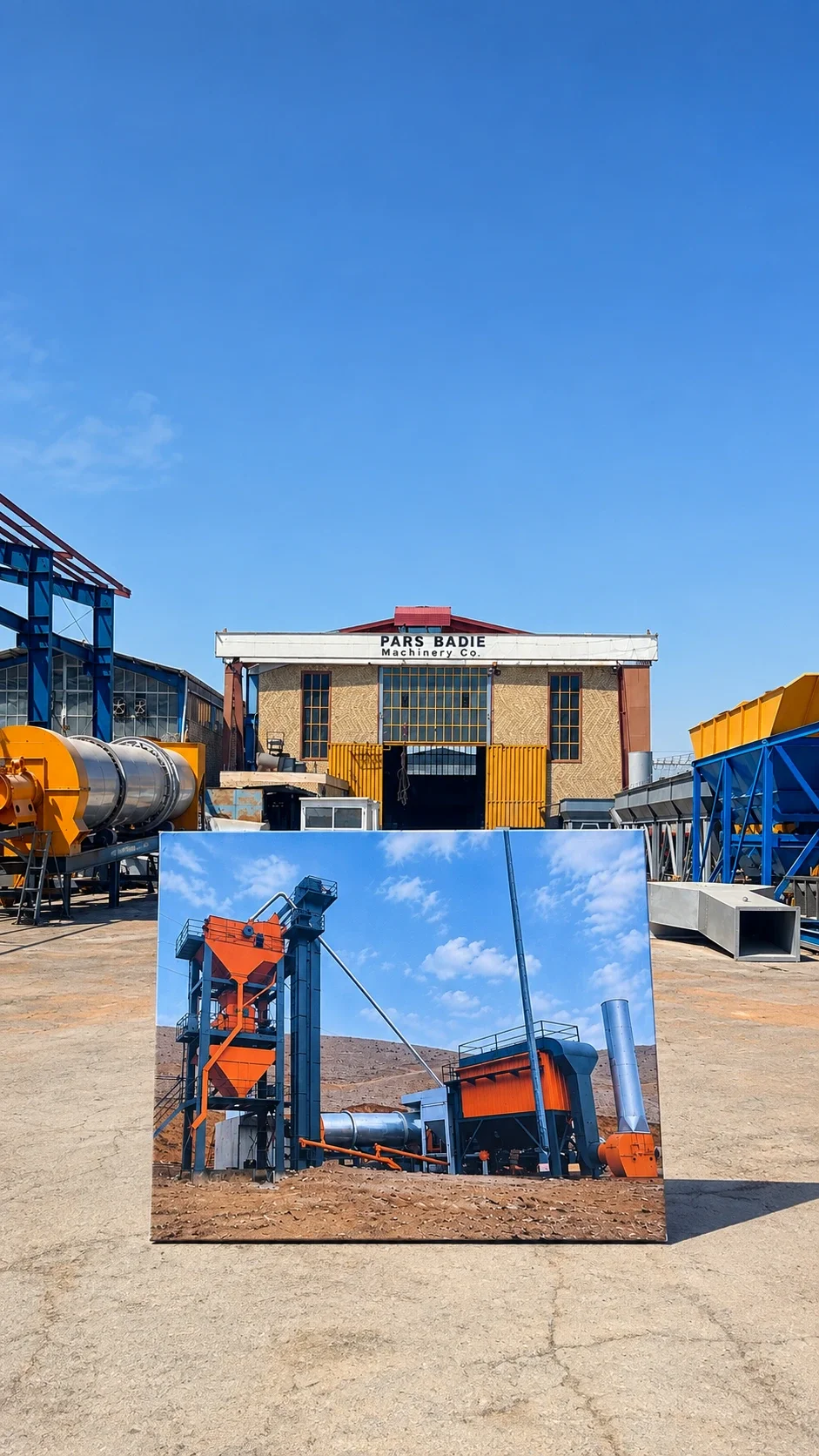
Pars Badie Machinery manufactures fully automatic asphalt plants with capacities of 80, 120, 160, and 240 tons per hour.
The appropriate capacity should be selected according to the actual requirements and operating conditions of each project.
80 TPH Asphalt Plant
An 80 TPH asphalt plant can be considered for projects with relatively lower production requirements.
120 TPH Asphalt Plant
A 120 TPH asphalt plant can be used for projects requiring a higher production rate than lower-capacity plants.
160 TPH Asphalt Plant
A 160 TPH asphalt plant is suitable for projects requiring a higher production capacity and a greater asphalt output per hour.
240 TPH Asphalt Plant
A 240 TPH asphalt plant is designed for projects with high production requirements where a significant volume of asphalt needs to be produced within the planned operating schedule.
Is a Higher-Capacity Plant Always Better?
No. A higher-capacity plant is not necessarily the most suitable choice.
The plant should be selected according to the actual requirements of the project. Choosing a capacity significantly above the required production rate can increase investment and operating costs, while selecting a capacity below the project’s requirements may limit production and affect the construction schedule.
Therefore, the appropriate capacity is the one that can meet the project’s production requirements while considering production conditions, transportation, and the overall construction schedule.
The Role of the Asphalt Plant Manufacturer
The appropriate plant capacity should ideally be determined before purchasing the equipment and after evaluating the project’s technical requirements. An asphalt plant manufacturer can review factors such as project volume, required production rate, site conditions, and operating schedule to help determine a suitable capacity.
With more than 40 years of industry experience, Pars Badie Machinery designs and manufactures asphalt plants with capacities ranging from 80 to 240 tons per hour and provides installation and commissioning services.
Conclusion
Asphalt plant capacity is one of the most important factors in selecting and designing an asphalt production system. Project volume, daily production requirements, project schedule, transportation conditions, aggregate moisture, and operating conditions should all be considered before selecting the appropriate capacity.
Pars Badie Machinery manufactures asphalt plants with capacities of 80, 120, 160, and 240 tons per hour, providing different capacity options for various project requirements.
Careful evaluation of project requirements and consultation with the manufacturer can help ensure a more suitable asphalt plant capacity and a more efficient production system.