
Main Components of an Asphalt Plant and Their Functions
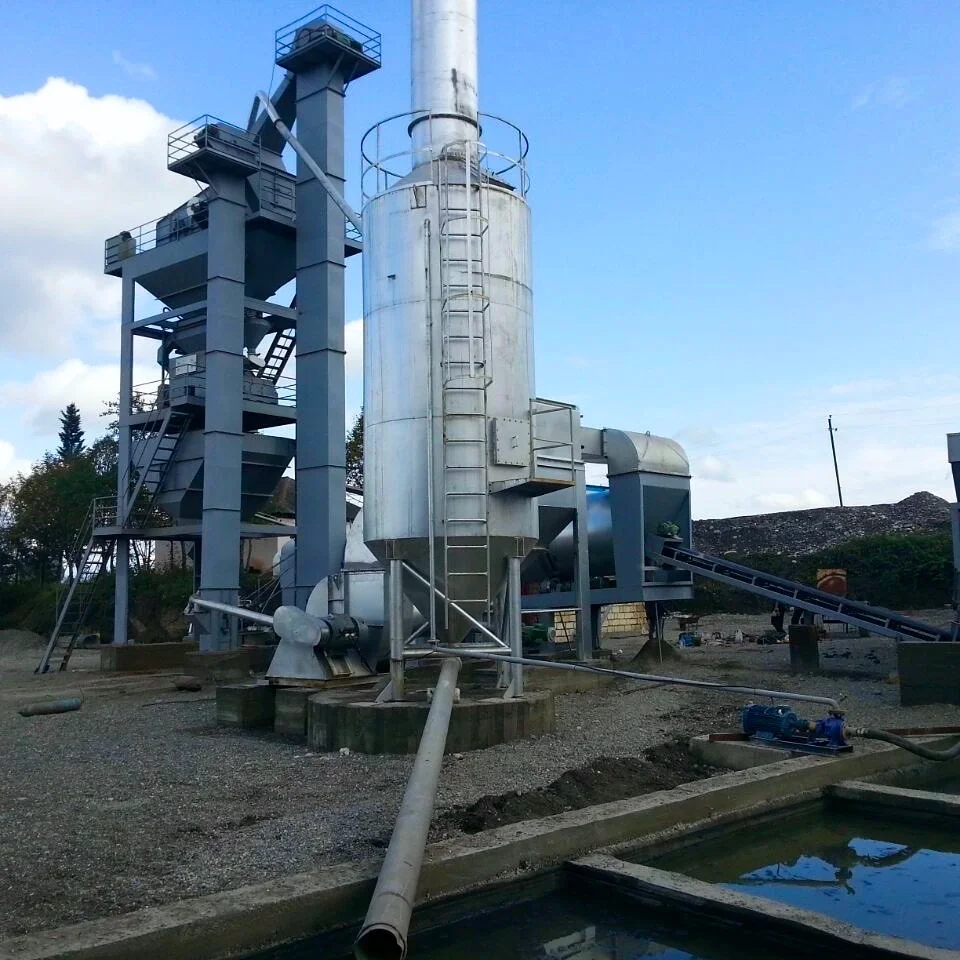
Main Components of an Asphalt Plant and Their Functions
Introduction
An asphalt plant consists of a number of interconnected components, each performing a specific function in the asphalt production process. The proper and coordinated operation of these components directly affects asphalt quality, production capacity, energy consumption, and overall plant performance.
In this article, we review the main components of an asphalt plant and explain the role of each one in the production process.
1. Aggregate Bins
Aggregate bins are used to store and organize aggregates with different particle sizes. The aggregates are continuously and accurately fed from the bins into the production line for further processing.
2. Aggregate Conveyor
The aggregate conveyor transfers materials from the bins to the next stages of the plant. Proper conveyor design ensures smooth and continuous material feeding throughout the production process.
3. Dryer
The dryer is one of the main components of an asphalt plant and is responsible for drying and heating the aggregates. Removing moisture from the aggregates and reaching the required temperature are essential for achieving proper mixing and asphalt quality.
4. Turbo Jet Burner
The burner provides the heat required by the dryer. A Turbo Jet burner produces controlled and efficient heat, allowing the aggregates to be heated uniformly and the required process temperature to be maintained.
5. Multi-Cyclone Filler Collector
The multi-cyclone is used to separate and collect a portion of the filler particles and dust present in the exhaust airflow. It helps control dust and reduces the load on the filtration system.
6. Bag Filter
The bag filter is one of the main dust-control systems in an asphalt plant. Using filter bags, it captures particles from the exhaust airflow and helps reduce dust emissions during the production process.
7. Exhaust Fan
The exhaust fan creates the required suction and directs the exhaust gases and airflow through the plant system. Proper exhaust fan operation is essential for maintaining suitable airflow and ensuring efficient filtration.
8. Screw Conveyors
Screw conveyors are used to transfer materials such as filler through different sections of the asphalt plant. They provide controlled and continuous material conveying.
9. Aggregate and Filler Elevators
Elevators are used to vertically transport aggregates and filler to different sections of the plant. They provide continuous material transfer and proper feeding of downstream equipment.
10. Screen
The screen separates and grades heated aggregates according to particle size. After screening, the aggregates are directed to different sections of the plant, including the hot bins.
11. Hot Bins
Hot bins are used to store and separate heated aggregates after screening. Each bin is generally assigned to a specific aggregate size range and supplies the required materials to the weighing system.
12. Weighing System and Mixer
The weighing system accurately measures aggregates, filler, and other required materials. After weighing, the materials enter the mixer, where they are uniformly mixed with bitumen. The accuracy of this system has a direct impact on the quality and consistency of the final asphalt mix.
13. Asphalt and Oversize Storage Silos
Storage silos are used for the temporary storage of produced asphalt. Separate oversize storage silos can also be used to collect oversized aggregates separated during the screening and hot-bin processes.
14. Control Room
The control room houses the power and control panels and other control equipment of the asphalt plant. Through the control system, the operator can monitor and manage plant equipment, motors, the weighing system, and key production parameters.
15. Power and Control Panels
Power and control panels are responsible for supplying, controlling, and protecting the plant’s electrical equipment. Components such as contactors, switches, overload relays, PLCs, and variable frequency drives (VFDs) are used to provide precise and reliable equipment control.
Conclusion
An asphalt plant consists of a series of interconnected components, each playing an important role in the production process. From aggregate storage and conveying to drying, heating, screening, weighing, mixing, and asphalt storage, the coordinated operation of all these systems is essential for reliable and high-quality asphalt production.
Proper equipment selection, efficient plant design, and suitable control systems can significantly improve production efficiency, product quality, and the long-term performance of an asphalt plant.