What Is the Difference Between an Elba-Type Mixer and a Twin Shaft Mixer?
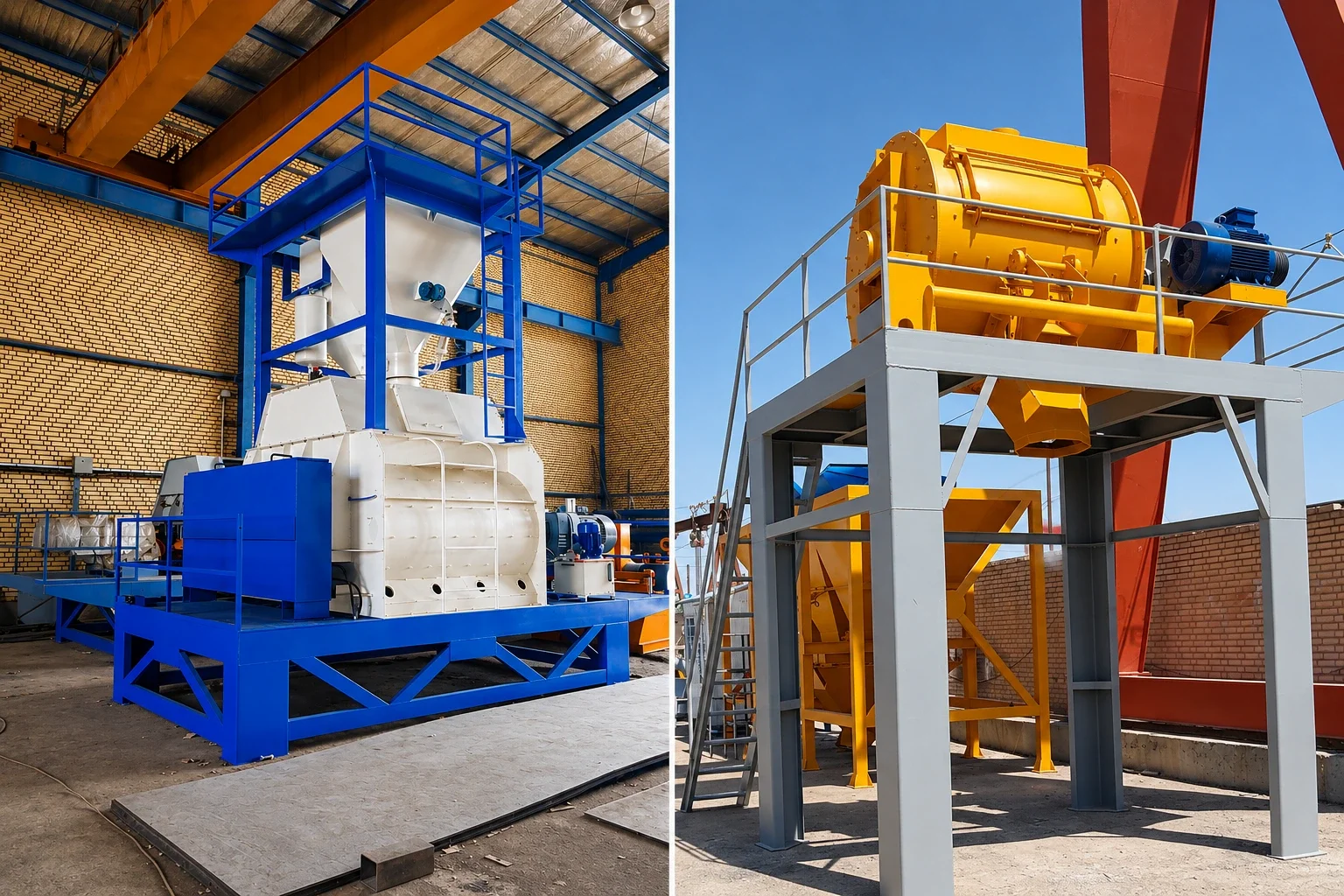
What Is the Difference Between an Elba-Type Mixer and a Twin Shaft Mixer?
Introduction
The mixer is one of the most important components of a concrete batching plant and has a direct impact on the quality and uniformity of the produced concrete. Two types of mixers used in the concrete industry are the Elba-type mixer and the Twin Shaft Mixer. Each has a different structure and mixing mechanism, and the right choice depends on factors such as project requirements, production capacity, and operating conditions.
In this article, we examine the structure, operation, and key differences between these two types of mixers.
What Is an Elba-Type Mixer?
An Elba-type mixer is a type of mixer used in concrete batching plants. It uses a shaft and specially designed mixing paddles to mix aggregates, cement, water, and other concrete components.
Its suitable design allows the materials to move inside the mixing chamber and form a relatively uniform mixture. Elba-type mixers are used in various concrete production projects due to their reliable operation and practical design.
What Is a Twin Shaft Mixer?
A Twin Shaft Mixer consists of two parallel shafts equipped with mixing paddles. The synchronized movement of the two shafts creates opposing material flows inside the mixing chamber, allowing the components to be mixed rapidly and uniformly.
This design provides efficient mixing and makes Twin Shaft Mixers a suitable option for high-production batching plants and projects where concrete uniformity is particularly important.
Elba-Type Mixer vs. Twin Shaft Mixer
The main difference between these two mixers is their shaft configuration and the way materials move inside the mixing chamber. In a Twin Shaft Mixer, two shafts rotate simultaneously and work together to create strong opposing flows and intensive mixing.
An Elba-type mixer has a different internal design and mixing mechanism. In general, the twin-shaft configuration can provide fast and uniform mixing of large quantities of material, while an Elba-type mixer can also offer reliable performance when its design matches the requirements of the project.
Mixing Speed and Quality
Mixing quality is one of the most important factors when selecting a batching plant mixer. In a Twin Shaft Mixer, the synchronized movement of two shafts and their paddles causes the materials to move in different directions, promoting effective and uniform mixing.
An Elba-type mixer can also produce a uniform concrete mixture through its paddle and mixing-chamber design. The choice between the two should therefore be based on the actual requirements of the batching plant and project.
Which Mixer Is Right for Your Project?
The appropriate mixer depends on factors such as batching plant capacity, concrete type, production volume, project conditions, and required mixing performance.
When high mixing speed and uniformity are important, especially in higher production applications, a Twin Shaft Mixer can be a suitable option. On the other hand, an Elba-type mixer can be an appropriate choice when its technical specifications and operating characteristics match the project requirements.
Therefore, production capacity and project conditions should be carefully evaluated before selecting the mixer.
Conclusion
Both Elba-type and Twin Shaft Mixers are used for mixing materials in concrete batching plants, but their structures and mixing mechanisms are different. With two parallel shafts and multiple mixing paddles, the Twin Shaft Mixer creates opposing material flows and provides fast and uniform mixing.
The final selection should be based on production capacity, project requirements, and the technical specifications of the batching plant. Pars Badie Machinery Co. designs and manufactures batching plant equipment and mixers, providing suitable solutions for different concrete production projects.