
How Does an Asphalt Plant Work?
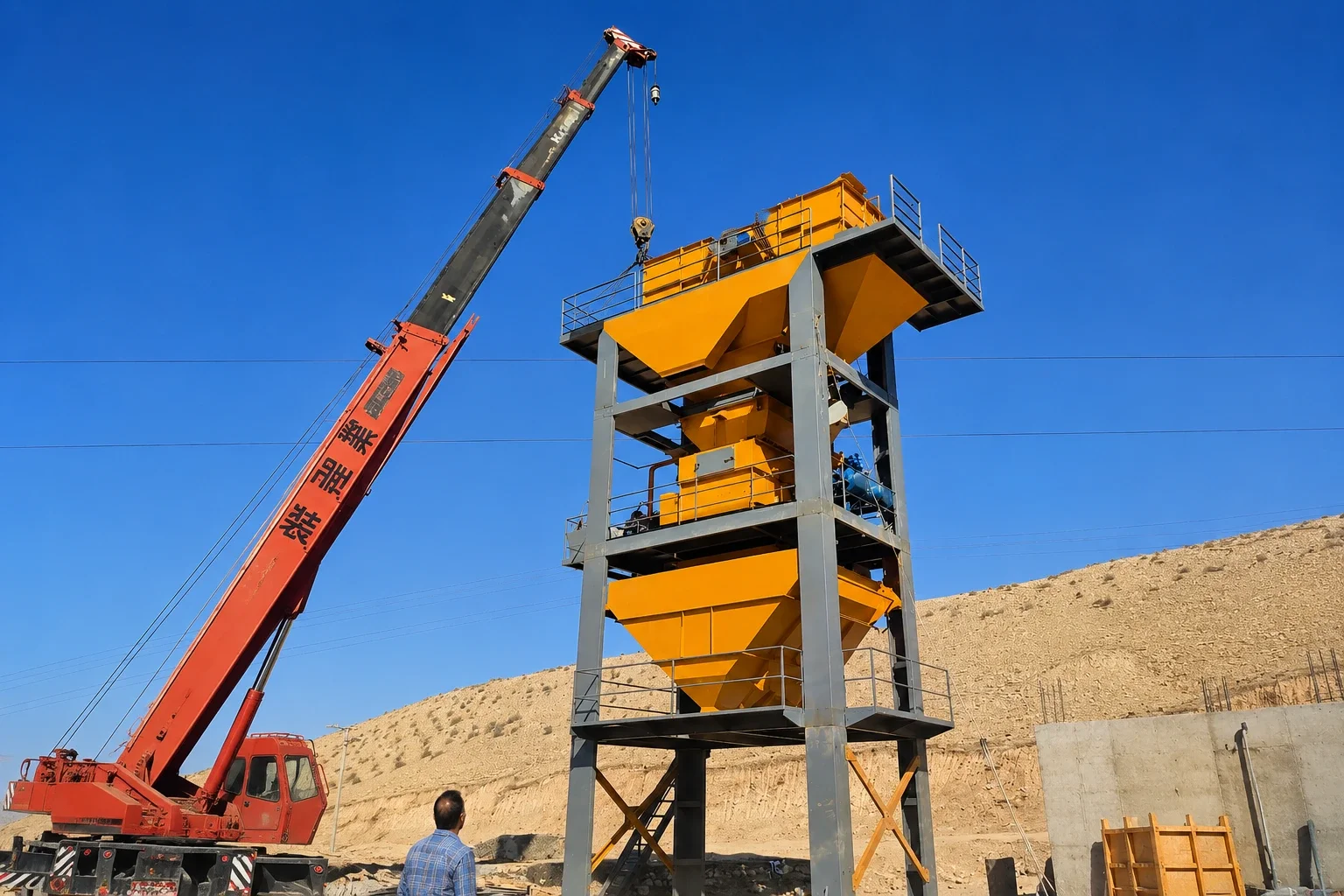
How Does an Asphalt Plant Work?
Introduction
An asphalt plant is an integrated system consisting of different equipment that work together to prepare aggregates and produce asphalt. The production process includes several stages, from aggregate storage and drying to screening, weighing, mixing with filler and bitumen, and finally storing the finished asphalt.
The proper coordination of all these components plays an important role in maintaining consistent production and achieving high-quality asphalt.
1. Aggregate Storage and Feeding
The process begins with storing aggregates with different particle sizes in the aggregate bins. These bins provide a continuous supply of aggregates to the production line.
The required amount of material is discharged from the bins and transferred to the dryer by conveyor belts.
2. Aggregate Conveying
Conveyors transfer the aggregates from the storage bins to the dryer. A consistent and controlled flow of aggregates is important to maintain stable operation throughout the production process.
3. Drying and Heating
The aggregates enter the dryer, where they are dried and heated by hot gases produced by the burner. As the rotating drum moves the aggregates through the hot airflow, moisture is removed and the aggregate temperature increases.
Proper burner adjustment and temperature control are essential for efficient drying and heating.
4. Dust Collection
During the drying and heating process, dust and fine particles are carried with the exhaust gases. The multi-cyclone can separate a portion of these particles before the gases enter the bag filter.
The bag filter captures finer dust particles and helps control dust emissions from the asphalt plant.
5. Screening
After leaving the dryer, the heated aggregates are transferred by the aggregate elevator to the vibrating screen. The screen separates the aggregates according to their particle size.
The classified materials are then transferred to the corresponding hot bins.
6. Hot Bins
Hot bins temporarily store and separate the heated aggregates according to their different sizes. The required quantities of each aggregate fraction are discharged from the hot bins according to the mix design.
The materials are then transferred to the weighing system.
7. Weighing Aggregates and Filler
The weighing system accurately measures the required amount of each aggregate fraction. Filler is also weighed according to the specified mix proportions.
Accurate weighing is essential for maintaining the correct proportions of materials and producing a consistent asphalt mixture.
8. Bitumen Weighing
Bitumen is accurately measured according to the mix design before being added to the mixing process. Proper control of the bitumen quantity is important for maintaining the required composition and quality of the asphalt mixture.
9. Mixing
After the weighing process is completed, the aggregates, filler, and bitumen are transferred to the mixer.
The mixer thoroughly combines these materials to produce a uniform asphalt mixture. Proper mixing conditions are essential for achieving a consistent final product.
10. Asphalt Storage
The finished asphalt can be transferred to an asphalt storage silo after mixing. The storage silo provides temporary storage and allows the asphalt to be discharged in a controlled manner for loading and transportation.
Depending on the plant configuration, a separate silo may also be provided for oversized aggregates.
11. Control System
The entire production process is monitored and controlled through the asphalt plant control system. From the control room, the operator can control the plant equipment, motors, weighing systems, and other important production parameters.
PLCs, inverters, and control panels help coordinate the different sections of the plant and provide accurate process control.
Conclusion
An asphalt plant is an integrated production system in which different components work together to produce a consistent asphalt mixture. Aggregates are first stored and conveyed, then dried, heated, screened, and accurately weighed before being mixed with filler and bitumen.
The proper design, operation, and coordination of equipment such as aggregate bins, conveyors, dryers, burners, vibrating screens, hot bins, weighing systems, mixers, bag filters, and storage silos are essential for reliable production and high-quality asphalt.