: What Is a Liebherr-Style Mobile Batching Plant? Features and Advantages
What Is a Liebherr-Style Mobile Batching Plant? Features and Advantages
Introduction
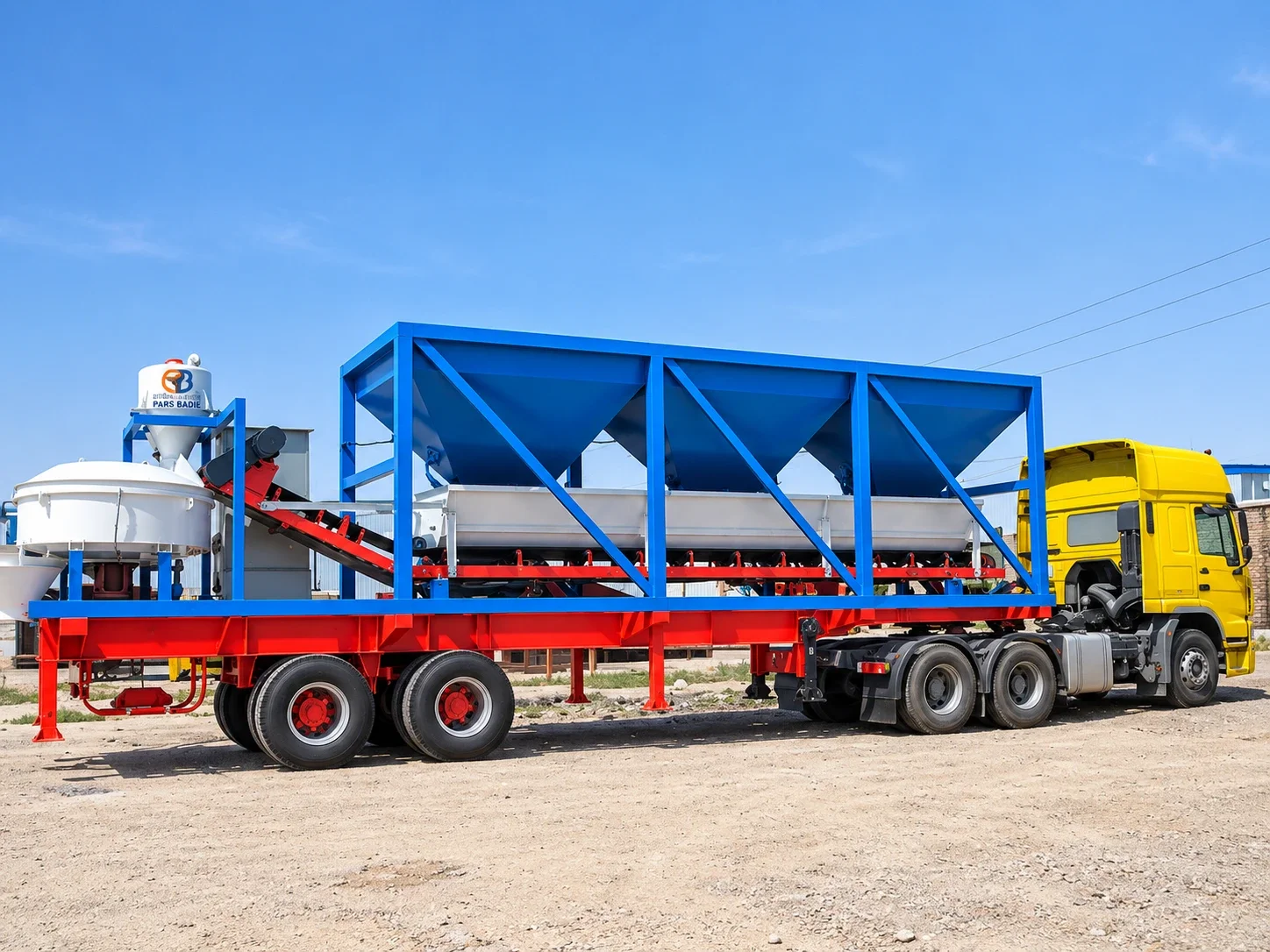
A Liebherr-style mobile batching plant is an option for construction and infrastructure projects that require concrete production at the job site and the flexibility to relocate equipment when necessary. A compact layout, adaptable installation, and transportability can be important considerations when selecting a mobile concrete batching plant.
The right configuration depends on the required production capacity, project specifications, installation conditions, and expected relocation requirements.
How Does a Mobile Batching Plant Work?
A mobile batching plant operates through the controlled weighing and mixing of concrete ingredients. Aggregates, cement, water, and required admixtures are measured according to the specified mix design and transferred to the mixer.
The materials are then mixed to produce concrete with the required characteristics. The weighing and control systems help manage production stages and maintain consistency between batches.
The exact operating sequence, equipment layout, and transportation requirements vary according to the plant’s design and configuration.
Main Components of a Mobile Batching Plant
Depending on the selected configuration, a mobile batching plant may include the following components:
● Aggregate bins: For storing and supplying aggregates
● Aggregate weighing system: For measuring aggregates according to the mix design
● Cement weighing system: For controlling the quantity of cement in each batch
● Water and admixture weighing systems: For supplying the required quantities of water and admixtures
● Concrete mixer: For mixing the ingredients into a uniform concrete mixture
● Material handling systems: For transferring materials between plant sections
● Control system and electrical panel: For coordinating and managing production operations
The arrangement and specifications of these components depend on the plant design, production capacity, and project requirements.
Advantages of a Liebherr-Style Mobile Batching Plant
1. Relocation Flexibility
One of the main advantages of a mobile batching plant is the ability to move equipment between project sites. This can be valuable for contractors working on multiple projects or projects with limited operating periods.
However, transportation requirements depend on the equipment dimensions, component weights, and applicable transport regulations.
2. Flexible Installation
A mobile batching plant may be suitable for projects where installing a permanent concrete production facility is impractical. Before installation, the site layout, material supply, and concrete delivery routes should be evaluated.
3. Controlled Concrete Production
Weighing and control systems help manage ingredient quantities and organize production stages. Equipment accuracy, proper calibration, and correct mix-design settings are essential for achieving the required concrete quality.
4. Applications Across Different Projects
Mobile batching plants can be used for road construction, building projects, civil engineering works, and infrastructure development, provided that the plant’s capacity and technical specifications meet the project requirements.
Mobile vs. Stationary Batching Plants
The main difference between mobile and stationary batching plants is their installation arrangement and relocation capability.
A stationary batching plant is generally designed for long-term operation at a fixed location. A mobile plant, by contrast, is selected when transporting equipment between different sites is an important operational requirement.
However, mobility does not eliminate the need for site preparation, utilities, safe equipment positioning, and installation procedures.
The choice between mobile and stationary equipment should consider production capacity, project duration, the number of operating sites, transportation costs, and operating conditions.
What to Consider Before Purchasing a Mobile Batching Plant
Before purchasing a mobile batching plant, consider the following factors:
● Actual concrete production capacity under the expected operating conditions
● Mixer type and capacity
● Accuracy of weighing and control systems
● Aggregate and cement storage capacity
● Installation and commissioning requirements
● Transportation requirements and site infrastructure
● Spare parts availability and after-sales support
● Maintenance and operating costs
The technical specifications, supplied equipment, and warranty conditions should also be clearly stated in the technical proposal and purchase agreement.
The Importance of Engineering and Manufacturing
The performance of a mobile batching plant depends on more than its ability to be relocated. Engineering design, structural quality, suitable equipment selection, weighing accuracy, and coordination between components all contribute to reliable operation.
When selecting a manufacturer, buyers should evaluate the technical specifications, equipment quality, spare parts availability, installation services, and after-sales support in addition to the initial purchase price.