What is a twin shaft mixer? Performance and Advantages in Batching Plants
What Is a Twin Shaft Mixer? Performance and Advantages in Batching Plants
Introduction
A Twin Shaft Mixer is an industrial mixer commonly used in concrete batching plants to rapidly and uniformly mix aggregates, cement, water, and other materials.
It uses two parallel shafts equipped with mixing arms and paddles to move the materials in different directions and produce a homogeneous mixture.
How Does a Twin Shaft Mixer Work?
A twin shaft mixer has two parallel shafts installed inside the mixing chamber. Each shaft is equipped with several mixing arms and paddles.
As the two shafts rotate simultaneously, the paddles continuously move and mix the materials throughout the chamber. This intensive movement allows the materials to reach a uniform mixture in a relatively short time.
Once the mixing cycle is completed, the discharge gate opens and the ready-mixed concrete is discharged for transportation to the project site.
Main Components of a Twin Shaft Mixer
The main components of a twin shaft mixer include:
Two parallel shafts
Mixing arms and paddles
Mixing chamber
Drive system
Drive motors
Gearboxes
Discharge gate
Wear-resistant liners
Each of these components plays an important role in the reliable operation and service life of the mixer.
Advantages of a Twin Shaft Mixer
One of the main advantages of a Twin Shaft Mixer is its high mixing speed. The simultaneous movement of the two shafts allows the materials to reach a uniform mixture in a short period of time.
Other advantages include:
Fast and uniform mixing
Suitable for high-volume concrete production
Effective mixing of different materials
Suitable for large construction projects
Strong and industrial design
Fast material discharge
Effective control of the mixing process
Twin Shaft Mixer Applications in Batching Plants
Twin shaft mixers are particularly suitable for batching plants that require continuous production and high output capacity.
After aggregates, cement, water, and other materials are accurately weighed according to the mix design, they are transferred into the mixer. The mixing cycle then begins.
Once mixing is completed, the finished concrete is discharged through the discharge gate and prepared for transportation to the project site.
Importance of Wear-Resistant Liners and Components
Because aggregates are continuously in contact with the internal surfaces of the mixer, various components are exposed to mechanical wear.
Using wear-resistant liners and regularly inspecting the mixing paddles and arms can help extend the service life of the mixer.
Regular inspection of bearings, gearboxes, the drive system, and other moving components is also important for maintaining reliable operation.
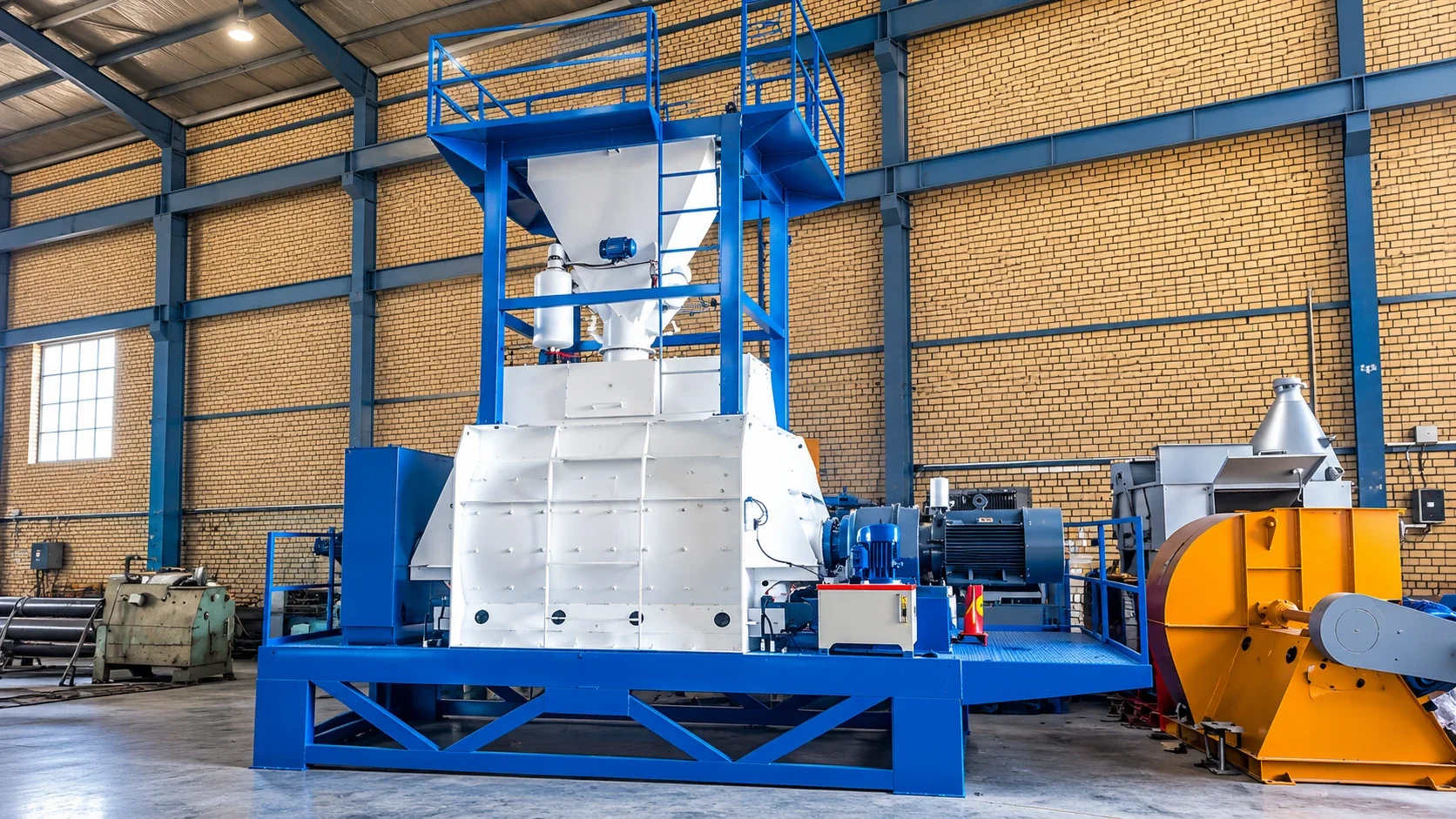
Pars Badie Twin Shaft Mixer
Pars Badie Twin Shaft Mixers are designed and manufactured to provide uniform mixing and reliable performance in concrete batching plants.
The design focuses on a robust structure, a suitable drive system, and components capable of operating under the demanding conditions of a batching plant.
The mixer capacity and specifications can be selected according to the batching plant capacity and project requirements.
Conclusion
The Twin Shaft Mixer is an important component of modern concrete batching plants. By using two parallel shafts and a paddle-based mixing system, it provides rapid and uniform mixing of concrete materials.
Its high mixing speed, consistent mixing performance, and suitability for different production capacities make the Twin Shaft Mixer an effective solution for many concrete production projects.